

How to Manage and Reduce Business Travel Expenses
Managing travel costs is about more than cutting spend. Here’s how businesses can control expenses while keeping travel practical for employees.

Managing business travel expenses becomes more complicated as the number of trips, travellers and suppliers increases. A single trip may involve flights, accommodation, ground transport, meals and other services, often booked at different times and paid for in different ways.
For the teams responsible for that spend, the challenge is having a clear picture of what the business is spending across its travel programme. That includes understanding which costs are planned, where spending regularly exceeds expectations and how travel policies are working in practice.
Effective business travel expense management starts with that visibility. It gives businesses a stronger basis for managing budgets and policies, using technology effectively and identifying where costs can be reduced without making travel more difficult for employees.
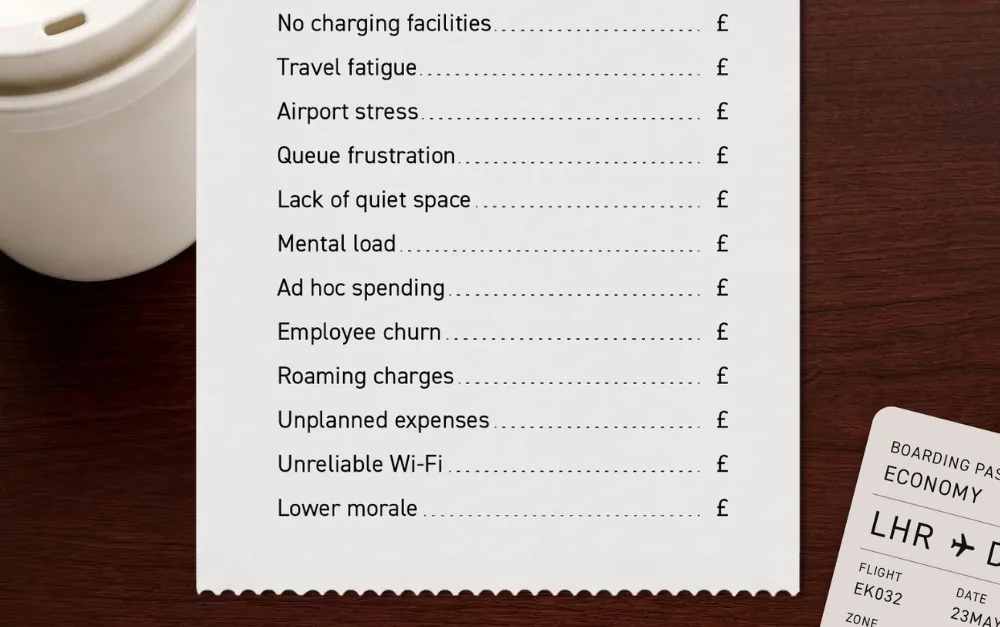
Business travel expenses are difficult to control. Why?
The cost agreed when a business trip is booked isn’t always the cost the business ends up paying. A meeting running late could mean changing a train ticket or a cancelled flight might require another night at a hotel. Other expenses may only become visible after the trip, particularly when employees pay for them directly and claim them back later.
Company policy can provide parameters for spending, but it can’t anticipate every situation. Changes to schedules and travel plans can quickly create costs that weren’t accounted for when the trip was booked.
This makes predictability an important part of managing corporate travel expenses. Businesses need to account for the costs they can plan for while recognising where flexibility may be required during the trip.
It also raises a practical question for employers: how much control can you introduce before it starts making business travel more difficult for the employee?
How to manage and reduce business travel expenses
1. Start with a clear view of your travel spend
Before making changes, businesses need to know what they are spending today because the total business travel budget doesn’t show the whole picture. Looking at spend by trip, destination, team or type of expense can show where the money is actually going.
A particular route might regularly cost more than expected. Ground transport could account for a surprisingly large share of business travel costs in one destination. Comparing expected costs with final spend can also show where the assumptions behind a corporate travel budget no longer reflect what trips are costing.
Those patterns give businesses something useful to act on. They can also show the difference between an occasional overspend and a cost that needs to be accounted for more realistically in future budgets.
2. Write a travel policy for the trip that actually happens
A policy written around the perfect business trip won't be much help when a flight is cancelled at 9pm.
Travel budgets are generally designed to account for some variation in travel volumes and prices. Travel policy is different. If it only tells employees what they can spend when everything goes to plan, they may be left making expense decisions during disruption without knowing whether the business will cover them.
Employees need clear parameters around bookings, spending and approved expenses, but they also need to know what they can do when circumstances change. That could mean booking another hotel night, arranging alternative transport or spending more than the usual meal allowance while stranded at an airport.
Employee feedback matters here too. If the same part of a policy repeatedly causes confusion or workarounds, there may be a problem with the policy rather than the people using it.
3. Book ahead when you can
This one is simple. Earlier bookings can give businesses more choice and reduce exposure to last-minute prices. It also gives more time to compare available options before committing to the cost of a trip.
But not every business trip comes with weeks of notice. Client meetings move and unexpected travel happens, but where there is flexibility, booking strategically can make a noticeable difference to what a business ultimately spends.
4. Centralise what makes sense
Centralising travel can make it easier to see what's being booked, apply company policy and understand spending across teams. It shouldn't mean forcing every traveller into exactly the same journey.
A sales team making frequent short trips may have very different requirements from an employee travelling internationally for a week. Consistency is useful where it gives the business better control; flexibility still matters where the trip calls for it.
5. Don't add technology for technology's sake
There is no shortage of platforms promising to make corporate travel easier. The useful question is what problem the technology is supposed to solve.
Is the business struggling to see travel spend? Are employees booking across too many places? Is policy difficult to apply? Do travellers need easier access to services during their journey?
Starting with the problem makes it easier to judge whether a new corporate travel technology tool will improve business travel expense management or simply just introduce another system for people to use.
6. Follow the money beyond the flight and hotel
Flights and accommodation are usually the easiest business travel expenses to see. Costs across the rest of the journey can be less visible, particularly when they are paid individually or claimed back later. Dragonpass research on the hidden costs of business travel found that UK business travellers cover an average of £95.15 of their own money per work trip, suggesting that some of the cost of business travel can sit outside the initial booking altogether.
An employee still has to get to the airport, eat while travelling, move through the terminal and reach their destination at the other end. Delays or long waits can change those costs again.
Looking at that journey as a whole can help businesses decide whether some services are better arranged in advance rather than paid for individually during each trip. Lounge access, Fast Track, airport dining and ground transport can all be considered in that wider picture to help with anticipating unplanned costs.
7. Decide what a saving is actually worth
Suppose one flight is £40 cheaper but adds three hours to an employee's journey.
Is that a saving?
Sometimes. But the lowest logical fare isn't always the cheapest option once the wider trip is considered. Additional travel time, an inconvenient arrival or the knock-on effect on the employee's working day can change the calculation.
The hidden cost of business travel research also found that 27% of UK business travellers have performed below their usual level because of the stress, discomfort or disruption of a business trip.
That doesn't mean businesses should pay significantly more for every improvement to the traveller experience. The more useful question is whether the business is getting enough value from what it spends.
This is where corporate travel savings become more nuanced. Businesses still need to control costs, but effective travel spend management is about maximising value rather than simply minimising the price of each part of the trip.
Can businesses reduce travel expenses without compromising the traveller experience?
Yes, particularly when savings come from better planning, clearer travel policies or addressing areas of repeated overspend rather than simply removing services or choosing the cheapest option.
A lower fare, for example, may come with a longer journey or inconvenient arrival time. Removing airport services could mean employees spend more of their own money on meals or lose productive time in queues.
For People and travel teams, employee experience therefore becomes part of the cost conversation. The aim isn’t to give every trip premium treatment, but to make spending decisions that allow employees to travel comfortably and do what the business sent them there to do.

Take control of business travel expenses
Business travel will always come with costs that are difficult to predict. What businesses can control is how well prepared they are for them. A clearer view of travel spend makes it easier to see where costs are recurring, where budgets need adjusting and where policies or processes aren't working as intended. It also gives businesses more confidence when deciding where to save and where spending still serves a purpose. Ultimately, good business travel expense management isn't about minimising every individual cost. It's about making better-informed decisions about what the business spends, where it can exercise greater control and where that spend still creates value for the employee and the trip.
Build a more practical approach to business travel. See how Dragonpass corporate travel solutions can support your employees with airport lounges, Fast Track, dining and more.