

Membership Is Lived, Not Calculated: What the Dragonpass Loyalty Index Reveals About the Future of Loyalty
As consumers become more selective about the brands they stay loyal to, the Dragonpass Loyalty Index reveals that loyalty is no longer just about rewards. It is built through trust, simplicity and experiences that feel relevant in everyday life.

For years, loyalty in financial services has been engineered around mechanics: earn rates, redemption charts, welcome bonuses. But loyalty was never purely mathematical. The annual Dragonpass Loyalty Index, launched as Dragonpass surpassed 40 million members globally and scaled into a $1 billion travel and lifestyle loyalty platform points to something more important than points: loyalty is shifting from accumulation to alignment. Across a nationally representative UK sample, the Index reveals a clear tension:
45% say loyalty rewards don’t fit their lifestyle
82% are frustrated by unclear or confusing offerings
19% start considering switching after just two years
30% say loyalty becomes more important during financial instability
The modern loyalty challenge isn’t generosity. It’s relevance.
From Programme Design to Membership Design Dragonpass powers travel and lifestyle benefits for financial institutions including Visa Airport Companion, Mastercard Travel Pass, and Revolut lounge access working with 37 of the world’s 50 largest banks. What this vantage point shows is a structural change: loyalty is evolving from a programme feature into a lived membership experience. Consumers aren’t simply asking, “What can I earn?” They’re asking, “Does this brand understand me?” The Loyalty Index found that:
44% want to understand a brand’s identity/personality before becoming loyal
38% are drawn to brand image or “vibe”
56% remain because they see their bank as the most secure option
This is where points-based models struggle: they optimise for transactions, not for trust, clarity, or felt value. The Coverage Proof Point: Loyalty Now Lives in Moments, Not Maths This shift is already playing out in how people make travel decisions and how they judge value. Recent press coverage highlighting our CMO Andrew Harrison-Chinn’s commentary on TikTok’s role in travel decision-making reinforces the same truth: people don’t just want inspiration, they want confidence, clarity, and a journey that feels smoother end-to-end. That’s exactly what “experience-led membership” is: benefits that show up at the moment they matter, not just on a statement.
The Five Loyalty Languages (and why “Simplicity” is the silent winner) To decode how loyalty is formed and sustained, Dragonpass identified five Loyalty Languages:
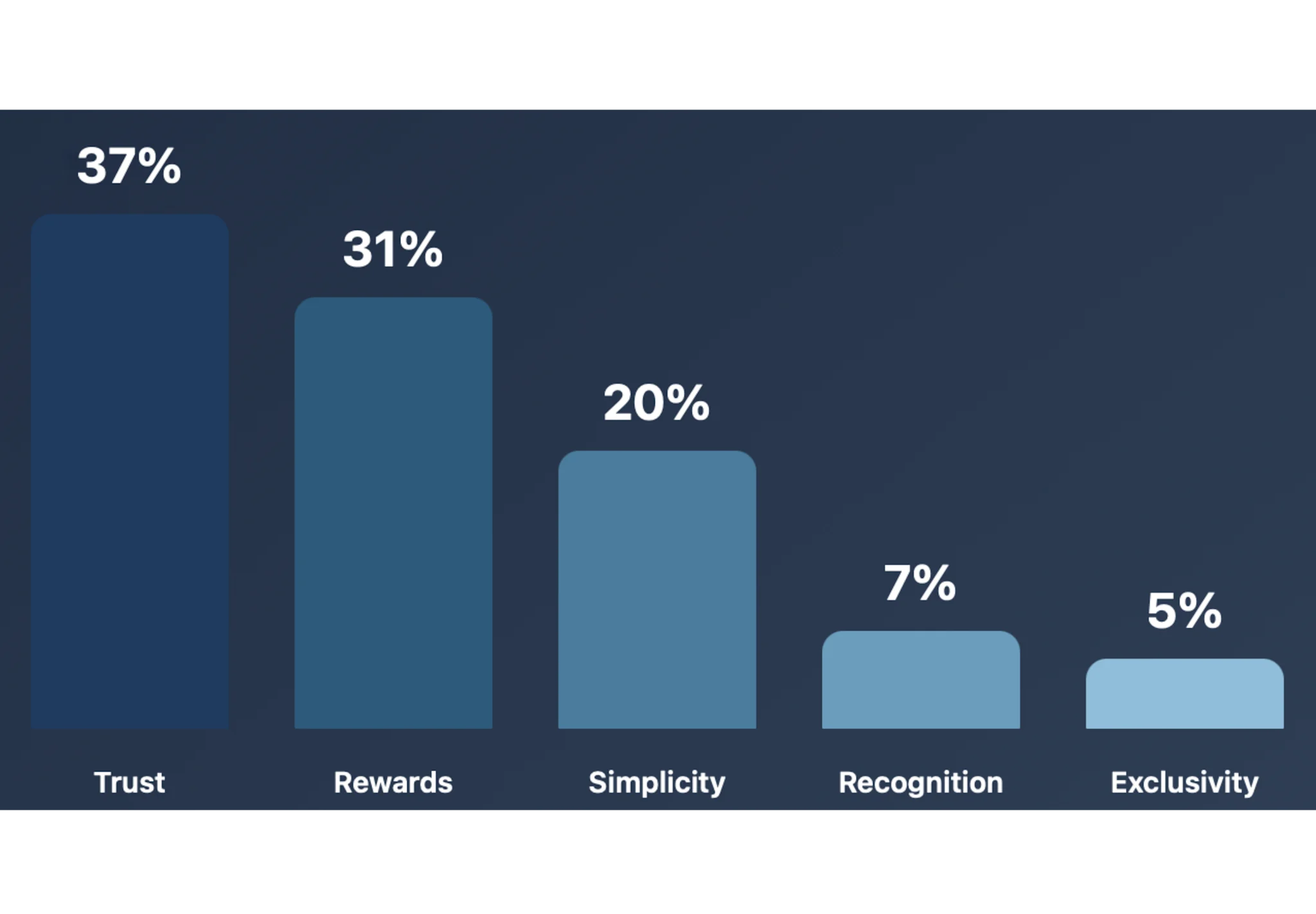
Trust and rewards lead but simplicity is often what converts loyalty from “nice idea” to “daily habit”.
Because friction kills loyalty faster than reduced earn rates:
benefits that are hard to find
unclear eligibility
redemption steps that feel like admin
If loyalty is meant to be a relationship, simplicity is the daily proof the brand respects the customer’s time. The Privacy Paradox: Relevance Without Intrusion Modern loyalty operates inside a delicate balance especially in financial services, where trust is foundational. The Index shows:
71% dislike brands repeatedly asking for personal information
Yet 44% are willing to share data if it results in better rewards or more personalised experiences
Consumers want relevance, but not intrusion. They want personalisation, but not pressure. This is the new loyalty mandate: trust-first personalisation, transparent, consent-led, and clearly tied to tangible value. Why Travel Is the Ultimate Loyalty Reality Check Travel is where loyalty becomes visible.
An airport lounge is not just a perk, it’s a moment of calm before departure. Fast Track security is not just convenience, it’s friction removed. Dining, spa and lifestyle offers aren’t “discounts”, they’re signals of recognition.
That’s why Dragonpass continues to anchor membership value in real experiences members can use instantly. And it’s also why the Great British Take-Off matters alongside the Loyalty Index: it captures the behavioural context, how UK travellers’ expectations, priorities and airport experience needs are shifting in real time. What “Experience-Led Membership” Looks Like in 2026 The Loyalty Index makes one conclusion unavoidable: Loyalty isn’t earned by volume of rewards. It’s earned by clarity, trust, and meaningful experience. So, what should modern loyalty leaders do next?
1) Design benefits around lifestyles, not tiers: If 45% say rewards don’t fit their lifestyle, the issue isn’t rewards, it’s fit.
2) Make value instantly understandable: With 82% frustrated by unclear offerings, clarity becomes a growth lever: plain English, fewer steps, in-app surfacing.
3) Personalise with trust-first data use: Respect the privacy paradox: explain the value exchange and keep members in control.
4) Deliver recognition at the moment it matters: Perks that arrive late don’t feel like benefits, they feel like marketing.
The Future of Loyalty: Membership That Feels Lived
The annual Dragonpass Loyalty Index shows loyalty is an intricate web of emotional resonance, lifestyle alignment, and dependable delivery, and it’s being judged in real-world moments, not spreadsheets. In 2026, the brands that win won’t simply offer benefits. They will deliver membership that feels lived.