

Why Generation Z Is Killing Traditional Brand Loyalty - And What Brands Must Do Instead
New research from Dragonpass shows how younger consumers in the GCC are shifting loyalty from long-term brand attachment to a real-time value exchange driven by tangible rewards, trust and everyday relevance.

For decades, loyalty was treated as a long-term emotional bond. Consumers chose a brand, enrolled in its programme, accumulated points and, more often than not, stayed.
In the GCC today, that model is under pressure, and generation Z is leading the shift.
According to Dragonpass’ latest GCC Loyalty Index, consumers aged 18 to 24 are the most likely to switch brands, the least aware of the perks available to them, and the most frustrated with existing loyalty programmes. At first glance, this might suggest that loyalty is weakening. In reality, it signals something more fundamental. Loyalty is not disappearing. It is being redefined.
The end of passive loyalty
Older generations in the GCC still demonstrate what could be described as habitual loyalty. Consumers aged 45 and above show the strongest tendency to remain with brands over time, often driven by familiarity and established relationships.
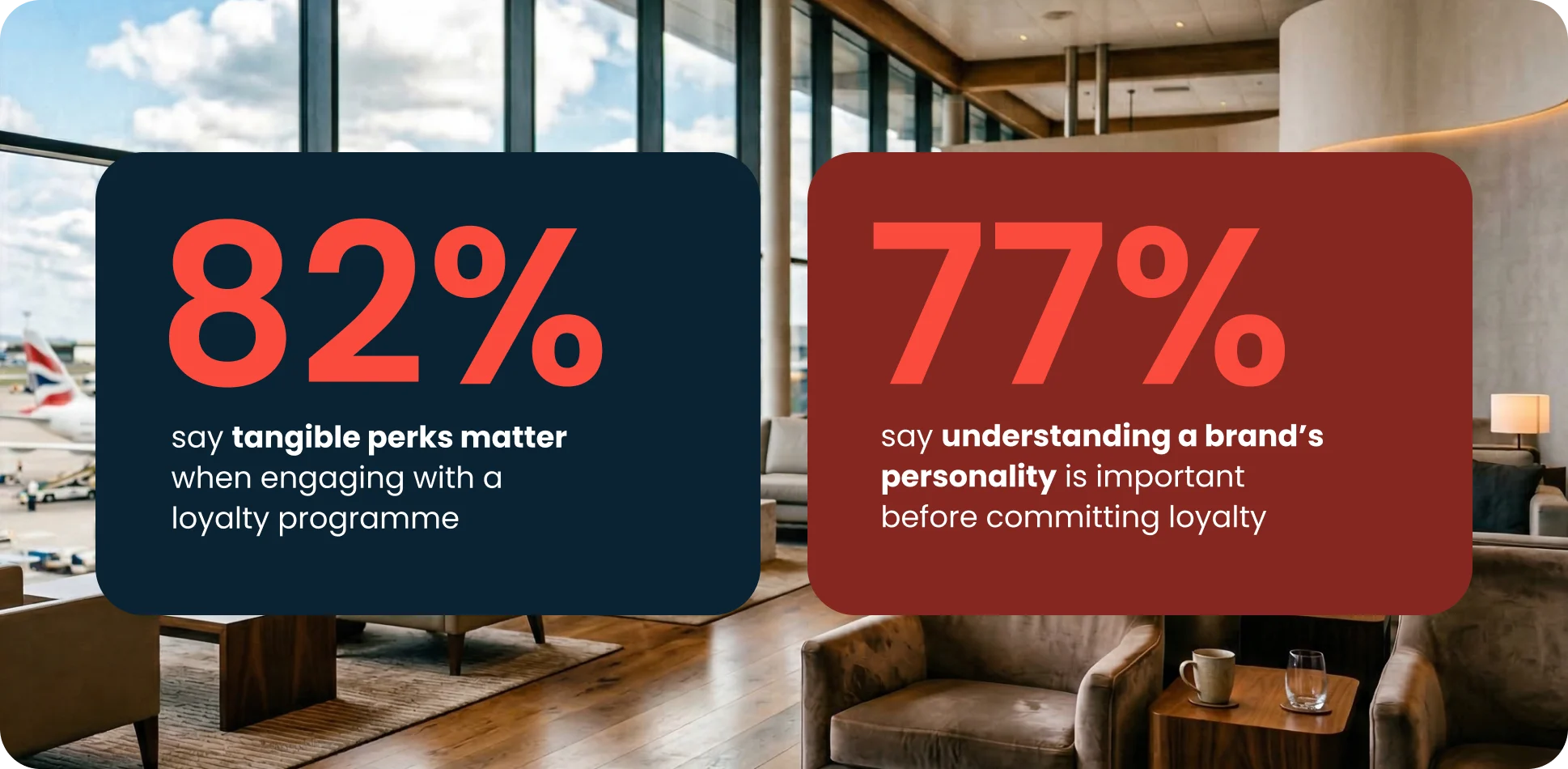
Yet even that loyalty is conditional. The Loyalty Index reveals that 82 percent of consumers say tangible perks play an important role in their decision to engage with a loyalty programme. At the same time, 77 percent say it is important to understand a brand’s identity and personality before committing their loyalty.
The implication is clear. Loyalty in the GCC is highly rational and value-led. Emotional affinity alone is no longer enough to secure long-term engagement.
For Gen Z, this rationality is intensified. Raised in a digital-first environment where price comparison, peer reviews and alternative providers are instantly accessible, younger consumers assess brands continuously. Loyalty is not assumed. It is evaluated in real time.
From emotional attachment to value exchange
Traditional loyalty programmes were built on accumulation. The logic was simple: spend more, earn more, redeem later. Over time, the brand relationship would deepen. That logic is now flawed.
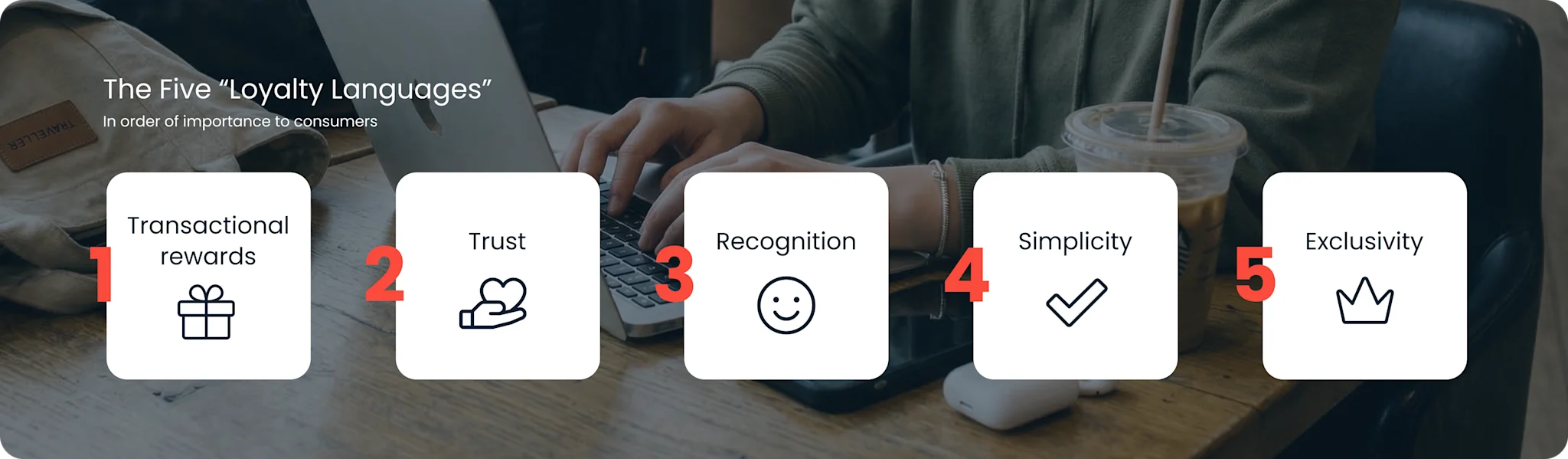
Dragonpass’ research identifies five distinct “Loyalty Languages” shaping consumer behaviour in the GCC:
Transactional Rewards
Trust
Recognition
Simplicity; and
Exclusivity.
Transactional Rewards is the strongest driver, with 34 percent of consumers identifying clear, tangible benefits as their primary loyalty motivator. Trust follows at 24 percent, while Recognition accounts for 14 percent. Simplicity and Exclusivity also play meaningful roles in shaping engagement.
This framework highlights a critical shift. Loyalty today is less about emotional attachment and more about the quality of the exchange. Consumers want to know what they are getting, whether it is easy to use, whether the brand delivers consistently, and whether they are recognised as individuals.
Gen Z, in particular, has little patience for delayed gratification. Points that require complex redemption processes or opaque conditions create friction. Friction leads to disengagement, and disengagement leads to switching.
Loyalty has moved into everyday life
Another important shift in the GCC is where loyalty now operates.
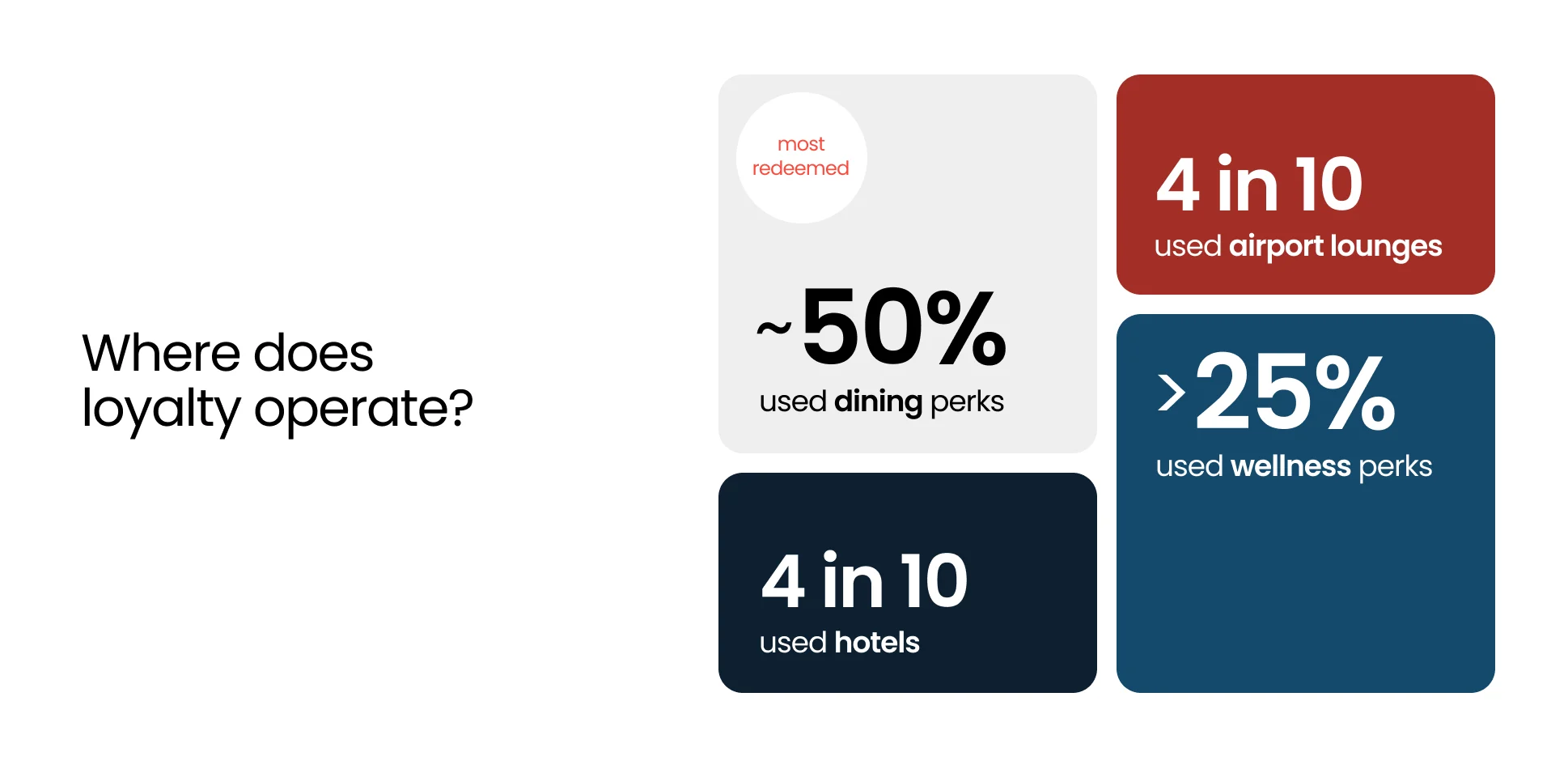
Travel has long been central to many loyalty strategies. However, the Loyalty Index shows that dining benefits are now the most commonly redeemed perk in the region, with around half of consumers using dining-related offers in the past 12 months. Hotel benefits and airport lounge access remain significant, each used by nearly four in ten consumers, but everyday lifestyle value is clearly gaining ground. More than a quarter of consumers now engage with wellness perks such as spa and fitness offers.
For younger consumers, loyalty must integrate into daily routines rather than revolve around occasional travel moments. Value needs to be immediate and relevant to everyday life.
This shift also changes the competitive landscape. Consumers no longer evaluate loyalty within category boundaries. A bank’s rewards programme is judged against hospitality brands, travel platforms and digital retailers that offer seamless, lifestyle-oriented experiences. The benchmark is no longer the industry average. It is the best experience a consumer has encountered anywhere.
The rise of the conditional consumer
Describing younger consumers as disloyal oversimplifies the issue. What the data reveals is the rise of the conditional consumer.
Gen Z continues to enrol in loyalty programmes. They are not rejecting the concept. However, they are far less tolerant of programmes that fail to deliver visible and immediate value. They expect transparency in terms and communication, seamless digital access, rewards that are genuinely usable, and personalisation that feels relevant rather than automated.
In a region such as the GCC, where digital adoption is high and demographics skew young, these expectations are amplified. When brands fall short, disengagement is often quiet. There are no dramatic announcements. Consumers simply reduce usage, shift spending, or move to competitors offering clearer value.
For sectors such as banking, travel and retail, this represents a structural shift. Loyalty can no longer sit on the periphery as a marketing add-on. It must be embedded within the broader customer experience.
What brands must learn
The implications for business leaders are significant. Gen Z is an emerging audience that brands cannot afford to overlook. According to research, this generation is expected to add nearly $9 trillion in spending power by 2034, reflecting the enormous economic influence they are poised to have in the coming decade.
First, loyalty strategies must prioritise tangible, everyday value. Accumulation models alone are insufficient in a market where consumers expect immediate utility.
Second, simplicity is essential. Complex tier structures, unclear redemption rules, and hidden conditions undermine trust and reduce engagement, particularly among younger audiences.
Third, recognition must feel authentic. While only 14 percent of consumers cite recognition as their primary loyalty language, personalisation is increasingly viewed as a baseline expectation across demographics.
Fourth, trust must be actively maintained. With nearly a quarter of consumers identifying Trust as their dominant driver, transparency and consistent delivery are fundamental to sustaining engagement.
Finally, brands must accept that loyalty is dynamic. It is not secured once a year through renewal or tier status. It is reassessed continuously.
The future of loyalty
Loyalty is not dead, it is demanding. For Gen Z, a generation with growing influence and spending power, brands that embed clarity, relevance, and consistency into their programmes can turn this discerning audience into loyal advocates. And in the GCC, where digital adoption is high and expectations are elevated, traditional loyalty is giving way to a pragmatic, experience-driven, and value-led model. For businesses willing to adapt, this is not a threat, it is an opportunity to build loyalty that is stronger precisely because it is earned.